

Most retail software is sold like a tasting menu. You sit down, you commit to the whole thing, and somewhere around course four you remember you came in for one dish.
The dish is usually small. Someone needs 4,000 product photos turned into attribute records before a range review. Someone needs batch and expiry pulled off pack shots that defeat every OCR engine on the market. Someone needs a floor plan converted into a linear-footage budget so a category argument can be settled with a number instead of a voice. None of these is a system. Each one is a fortnight of work that unblocks a quarter.
So nobody builds them. They are too small to justify a project, too repetitive to keep doing by hand, and too specific for general software to have bothered. The work stays undone, and every expensive system stacked on top of it quietly inherits the defect.
Two tools, built sideways
We built a thing that turns a product photograph into a full PLM record: silhouette, neckline, sleeve, fit, fabric, occasion, colour family. It took a fortnight. It unblocked a quarter of merchandising work that had been waiting on a catalogue nobody had time to fill in.
Then we did the same for Indian FMCG pack labels, where batch, manufacture and expiry turn up in a dozen layouts across a dozen scripts, and generic OCR gives up somewhere around the third one.
Neither is a platform. Both are worth real money to retailers who will never buy a platform. That observation is the entire product, and Tapas is us taking it seriously.
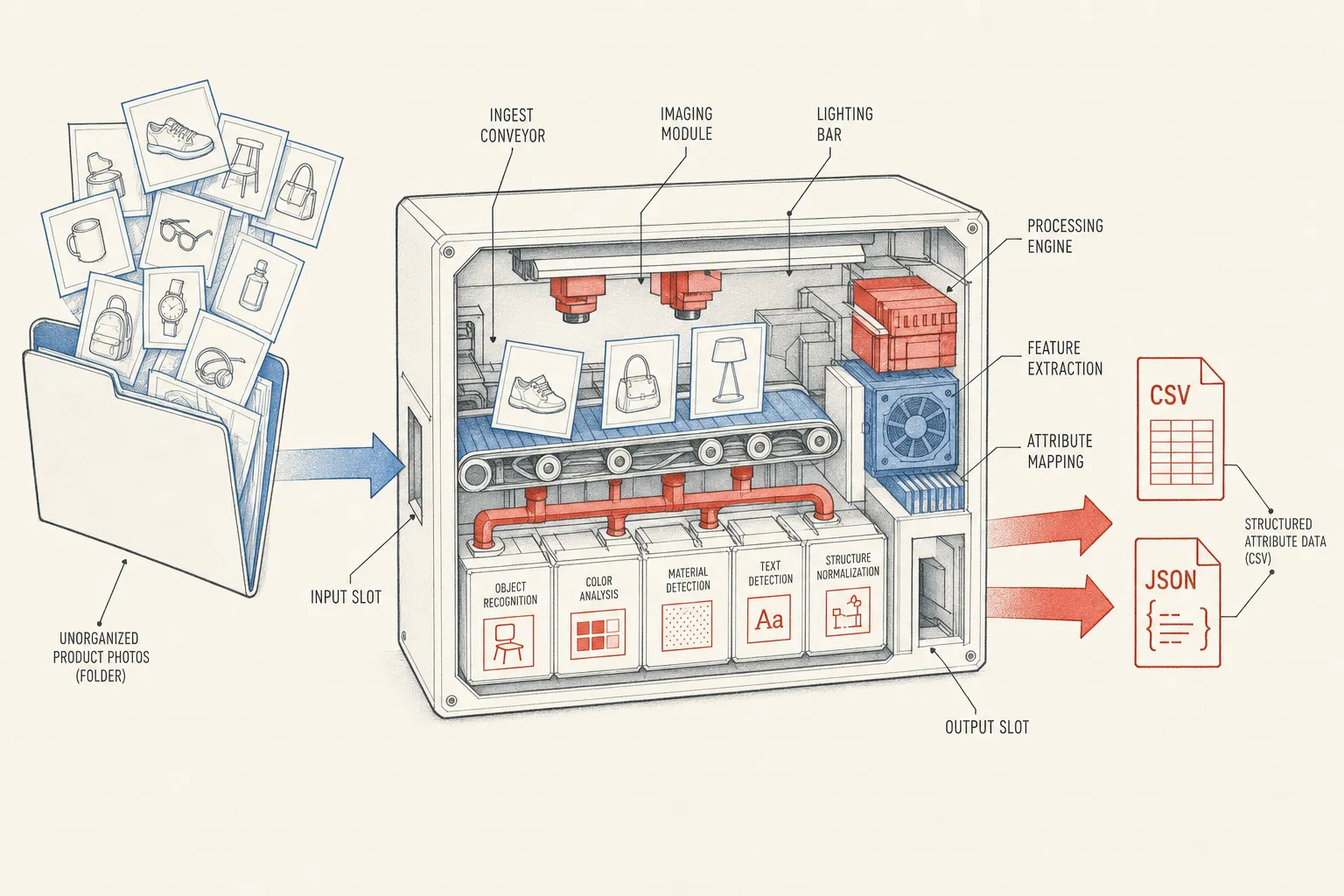
A plate does one job
Tapas is a menu of small retail tools from dg2n. Sixty-five of them, and counting. You order one, or six, or none.
Something earns a place on the menu by passing three tests. It does exactly one job. Its input is something you already have lying around, usually a photograph, a spreadsheet or a floor plan. Its output is a file, not a subscription, and not a change to how anyone works.
That last test is the strict one. A plate takes a folder and gives you back a file. No migration. No integration. No procurement cycle, no signature, no six-week onboarding where a consultant learns your business and bills you for the privilege.
It is also the honest weakness. Each plate is smaller than the enterprise module sitting next to it, because the enterprise module knows your entire business and the plate knows one folder. That trade is the offer, not a flaw in it.
The colour of the plate is the price
Conveyor belt sushi solved software pricing about forty years ago and nobody in software noticed.
At a kaiten-zushi counter the plates are colour-coded. You take what looks good as it passes, you know the price before you lift it, and the bill is a count of plates by colour. No menu, no commitment, no abstraction.
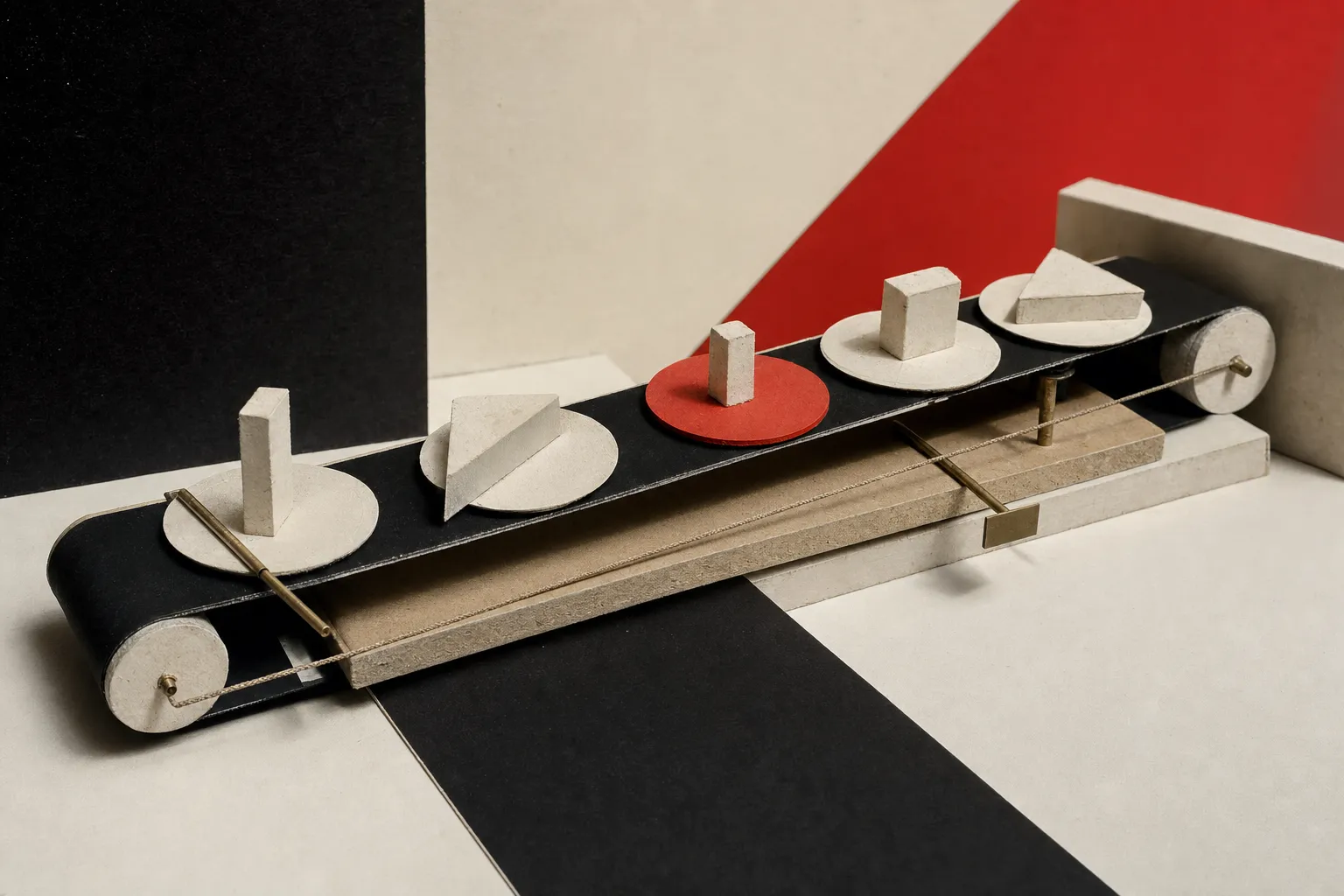
Tapas bills the same way.
Green plates are free. They run in your browser, permanently, with no account. Measuring tools, converters, the things that should never have cost money.
Blue plates are flat and cheap. Server-side work with no model behind it.
Red plates are priced per result. Anything model-backed, with the rate published on the tool's own page.
So 400 product photographs is 400 red plates with a rupee figure attached before you press go, and the invoice is a stack you can read at a glance. Credits are an abstraction designed to stop you counting. A plate count is just a number.
Tea is free, incidentally. Some things arrive at the table without being ordered.
The menu shows the empty kitchen too
Every plate on the menu carries a status, and the statuses are uncomfortable to read in public.
Ten plates are on the pass, meaning built and running. Four are in the kitchen, specified and partly built. Fifty-one are to cook, which means nothing exists yet beyond the specification.
We publish that ratio rather than bury it, because the ratio is the plan. The menu is a commitment to a publishing cadence, not an inventory of finished goods. If you want something from the fifty-one, saying so moves it up the queue, which is a more useful relationship than a roadmap slide with no dates on it.
Five courses, in the order the work actually happens
The courses follow a retailer's own sequence rather than a software vendor's org chart.
Course I is product data. What you know about the things you sell. SnapCatalog, LabelKit, Attribute Auditor, Spec Sheet Parser. Everything downstream inherits the quality of this course, which is why it is first and why it is the one most often skipped.
Course II is space. The shelf, the fixture, the floor. Caliper, Shelf Ruler, Orientation Reader, Cube Check, Plano Draft.
Course III is demand. What you are choosing against.
Course IV is execution. Whether any of the above actually happened on the floor, which is a different question from whether it was planned.
Course V is paperwork. The compliance and documentation wrapped around all of it.
The shelf has no file format
Here is the thing that surprised us. India standardised retail transactions in about four years: ONDC crossed 500 million cumulative transactions by July 2026. Payments, catalogues, orders, logistics, all of it now moves on published specifications.
The physical shelf has nothing. Globally, not just here.
GS1 describes a product in its natural state, which is the product sitting alone on a table. It does not describe the product as merchandised: facing forward, three deep, on a shelf of a particular height, next to a competitor, under a header that makes a promise. Every retailer models that in a private format, and every one of those formats dies inside the tool that wrote it.
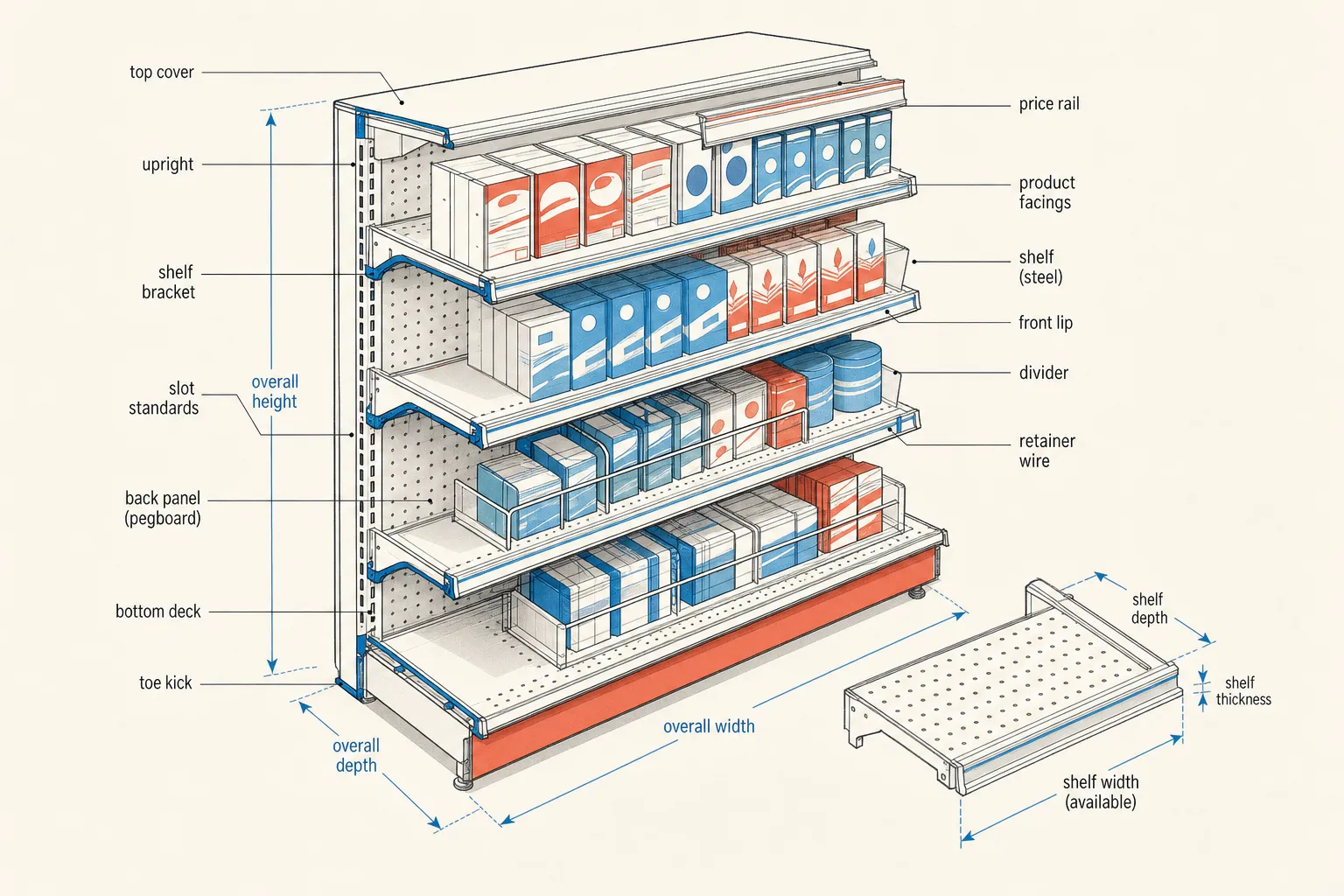
So alongside the menu we are publishing OpenShelf, an open schema family for the layer nobody standardised. Packs, fixtures and audits, as files anyone can write and anyone can read. Tapas plates read and write OpenShelf. So can your existing tools, and so can our competitors, which is the point of publishing it rather than selling it.
Take what looks good
Nothing here needs a project, an integration or a signature. Start with a green plate and spend nothing. Bring a folder and get back a file.
The belt is running. The plates are labelled. Take what looks good.