
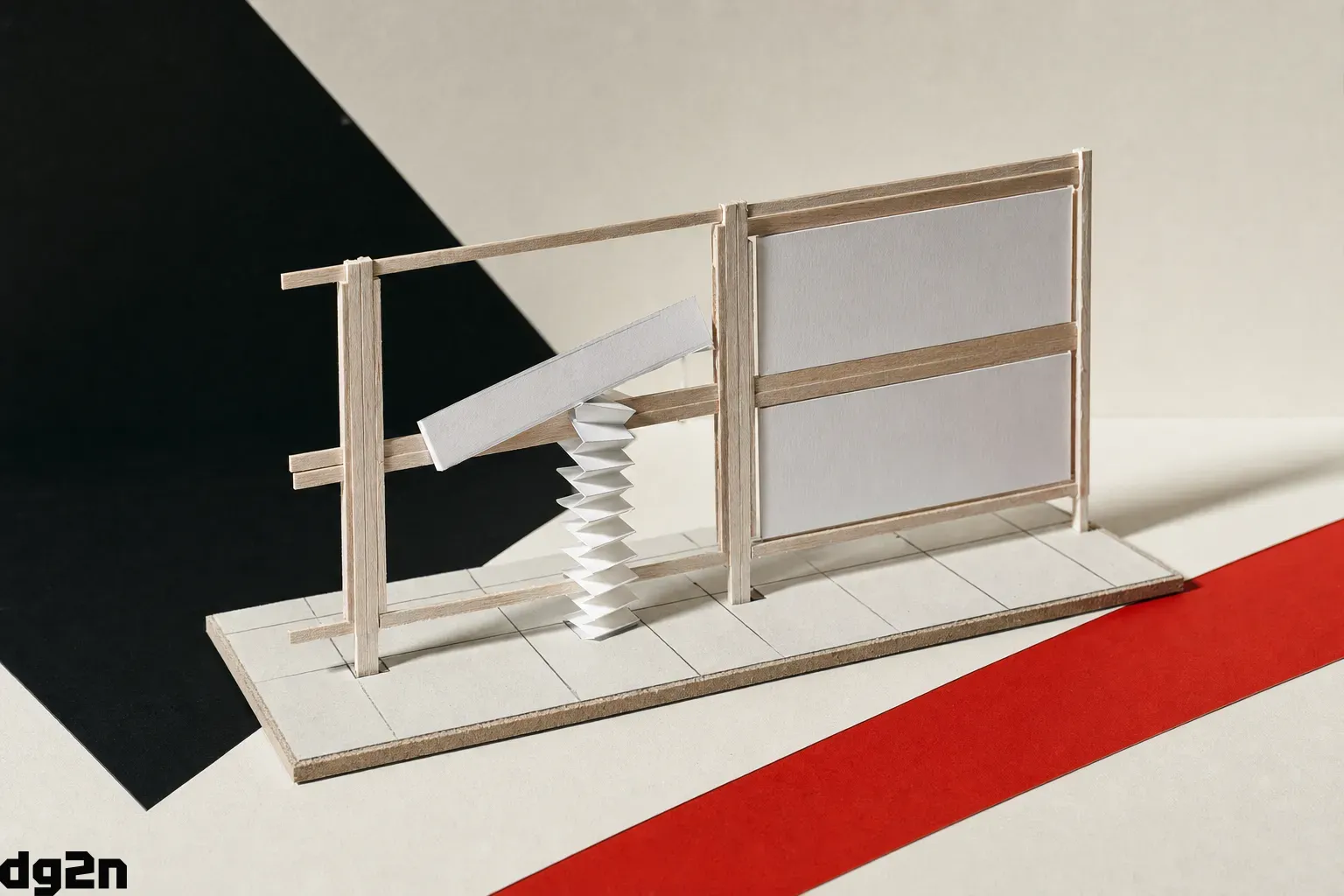
Every gap in the brief becomes a decision on the floor
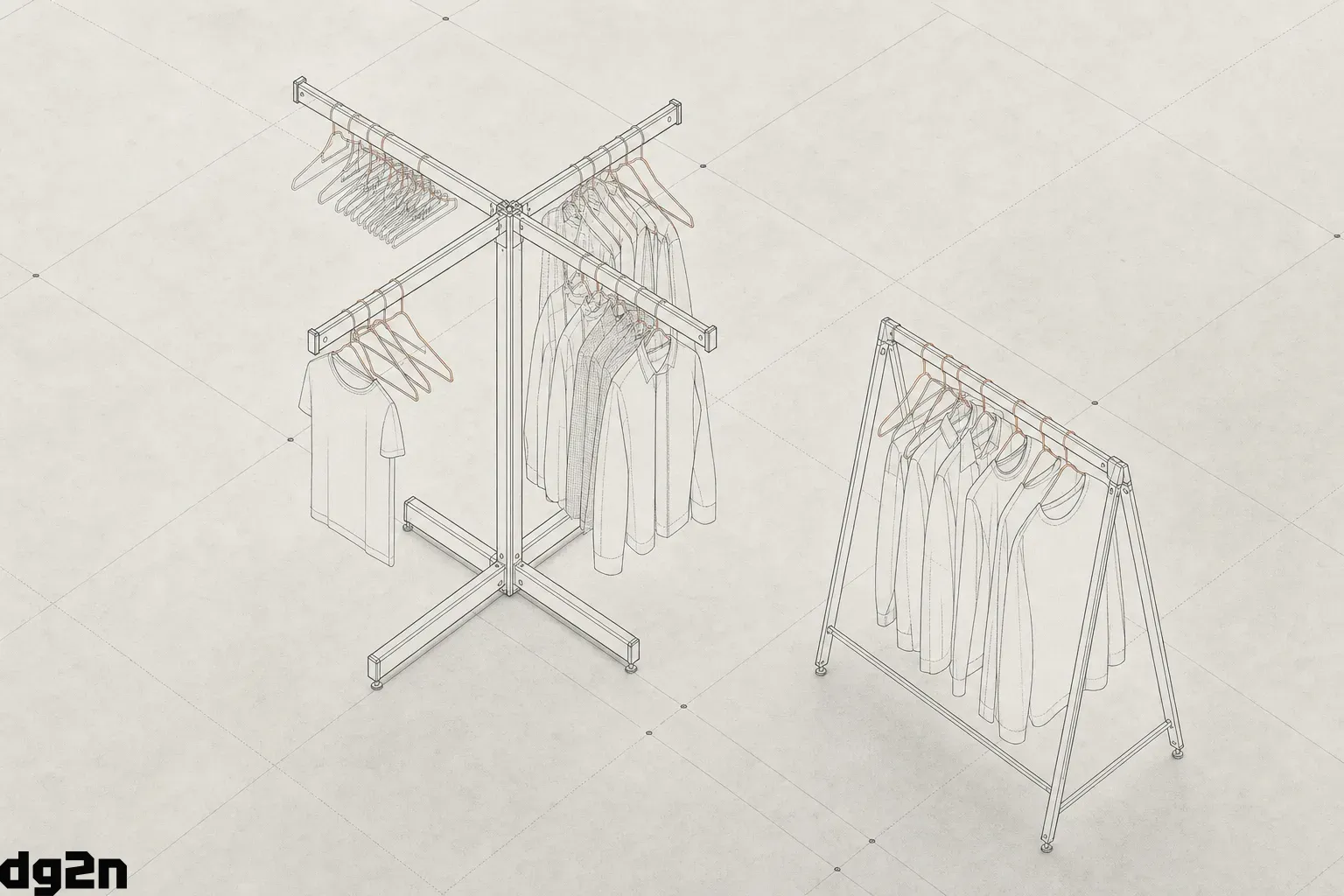
The brief lands in the store on Monday morning. Within twenty minutes an associate has made four decisions the plan did not make, and none of them will reach the person who wrote it.
The featured style is not in the stock room. The fixture in the reference image is a 4-way, and this store has an A-rail in that position. The brief says to support the story with coordinating bottoms, without saying which ones, how many, or what happens when the coordinating bottoms are down to two sizes. The associate is not going to call head office about any of this. The doors open at ten.
So the decisions get made locally. Substitute the nearest thing on the rail. Compress the 4-way arrangement onto the A-rail and lose two facings. Fill the gap with whatever has depth, which is usually the option that has depth because nobody is buying it. Each answer is reasonable given what the associate can see, and each one moves the floor a little further from the intent. Then the photo comes back and the store is marked partially compliant.
A compliance score records the deviation and discards the cause
The same off-plan photograph has at least four causes. The option was never allocated to that store. It was allocated, and sold through before the reset. The fixture kit in that store stopped matching the master list two seasons ago. Or the instruction was ambiguous and two associates read it two different ways.
Four causes, four owners: allocation, replenishment, store development, and whoever authored the brief. A single completion percentage cannot separate them, so the number travels upward and no correction travels back down. The store already knew which of the four it was, on the morning, for free. Most reporting formats throw that away and keep the score.
A plan written in styles breaks in option codes
The floor works at style-colour with a size run behind it. Planning often happens one level up, in styles and lookbook images, where the navy exists because the shoot had it.
When the navy is gone and the rust is on the rail, whether that counts as a substitution or a violation depends on a rule nobody wrote down. Depth works the same way. A wall bay reads as a statement at six facings with a full size run, and as a clearance bay at two facings with an XL. The plan specified the arrangement. The stock decided the outcome.
This is the gap that gets described as poor execution. It is closer to an underspecified instruction meeting a live inventory position, which is the normal condition of every store in the estate, every week.
The fallback belongs in the brief, next to the product
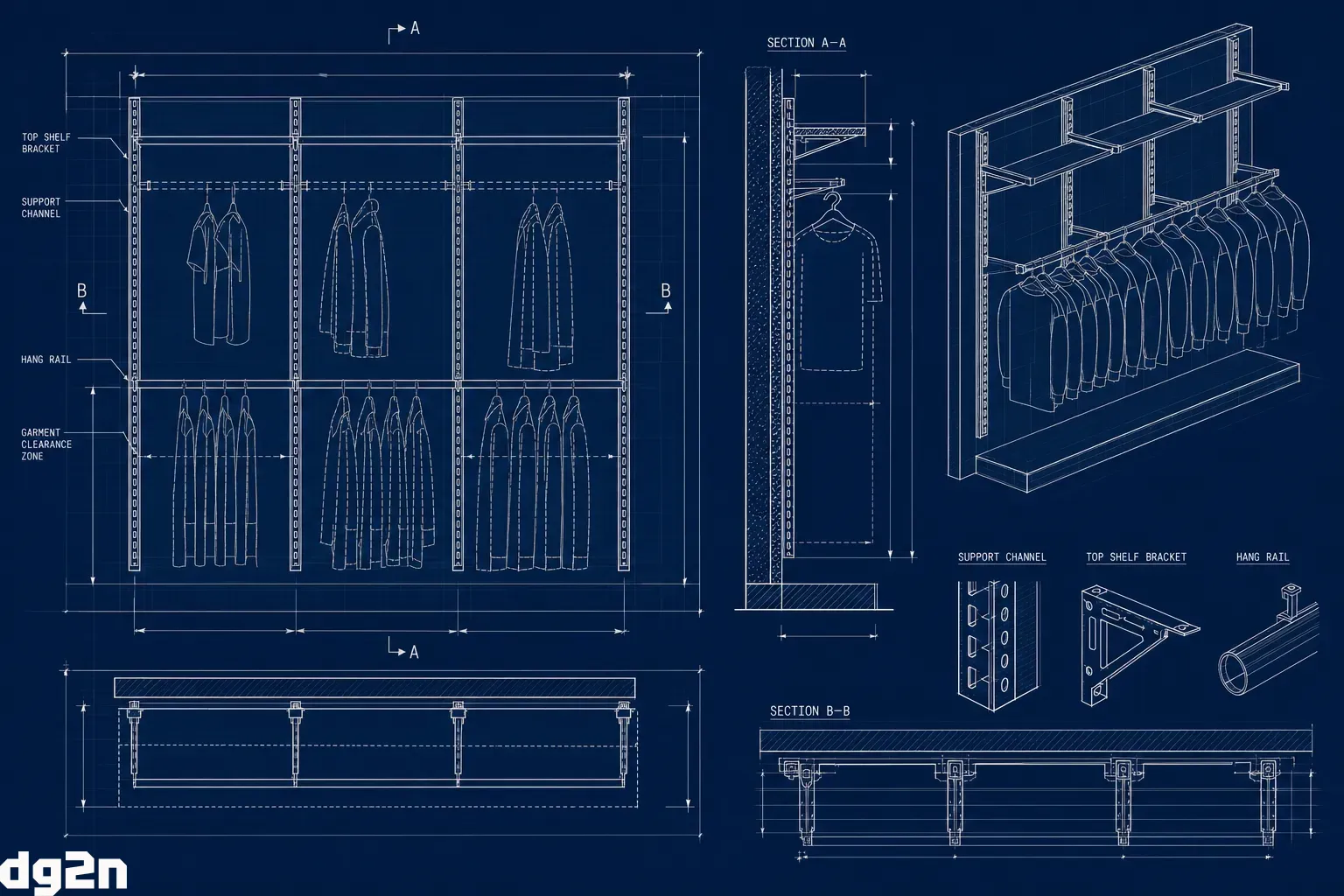
A brief that survives the floor carries the intent and the decision rules together, in the same document, at the same time.
- What the display should look like. The reference image, plus the rule the image is an instance of. An associate who knows why the darkest option anchors the bay can rebuild the bay without the exact option. An associate who has only the photograph is copying, and copying fails on the first missing item.
- Which products belong where. Positions expressed against fixture type and visibility rank, not against a picture of one flagship store. The entry-facing A-rail, the focal bay of the back wall, the top tier of the glass tower. Every store can resolve that. Only one store can resolve a floor coordinate.
- What may stand in for what. Substitution written as a rule: which grades can hold the position for a week, what colour relationship has to survive, the minimum depth that justifies a high-visibility slot, and the instruction to leave a position empty and report it when nothing qualifies. An empty facing is information. A filled facing is a story that quietly changed.
- What the team actually does. The fixture reset separated from the fill, with a sequence and a realistic time. Moving a rail and rehanging it are different tasks with different durations, and briefs that collapse them produce the version that fits in the time available.
Anything left implicit here is not removed from the plan. It is delegated, silently, to the person with the least context and the most time pressure.
An exception needs a type, an owner and a photograph
Free-text comment boxes and completion checkboxes fail in opposite directions. One captures nothing, the other captures everything in a form nobody can route.
Three exception types cover most of what actually goes wrong, and each has a different owner:
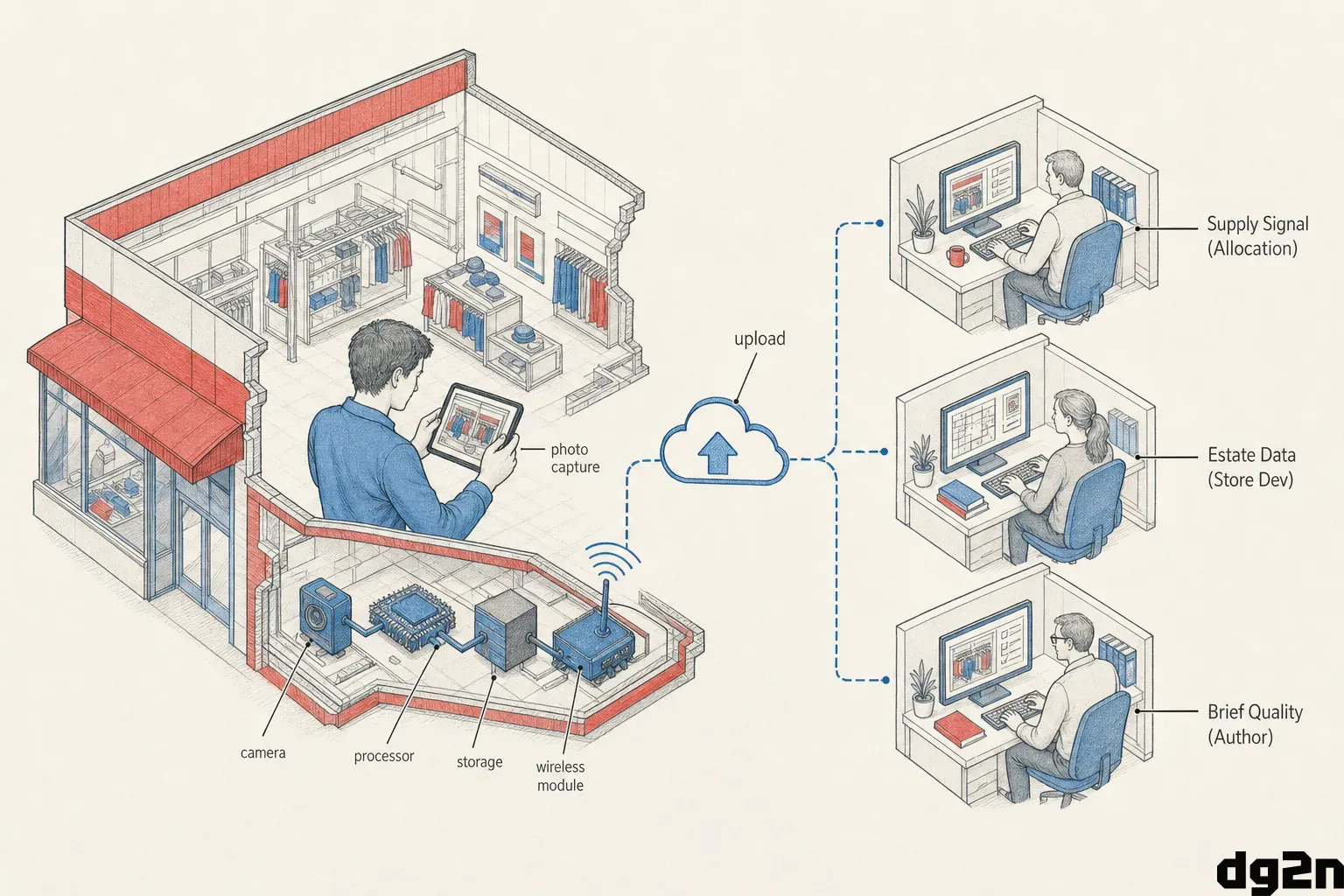
- Product unavailable. Option code, position, and what went up instead. This is a supply signal, and it belongs with allocation and replenishment on the same day it is raised.
- Fixture does not match. A photograph of the fixture that is actually standing there. This is an estate data problem, and it is worth more than the display it interrupted.
- Instruction unclear. The line that was ambiguous and the reading the associate went with. This one goes back to the author, and it is the cheapest quality signal available, because the second store to report the same line confirms the first.
A photograph and two sentences give a planner more than a week of compliance percentages. The photograph settles the argument about what the floor looks like, and the type tells everyone whose problem it is.
The weekly fill knows only what somebody wrote down
Chains at this scale no longer place options by hand. Fixtures are filled from live stock on a weekly cycle, and the fill is only as good as the rules it is given: fixture type, rank within type, grade mix, colour logic, depth thresholds, and what to do when a position cannot be filled to standard.
Those are the same rules the associate needed in the brief. One set of statements, rendered twice: as instructions for a person holding a hanger, and as constraints for the process that decides what ships to that hanger. When the two drift apart, the store is asked to execute a plan that the fill has already made impossible.
Exceptions are what keeps both honest. A fixture mismatch reported from a store corrects the estate record, and every future plan for that store improves. A substitution reported with its reason tells you whether the rule was wrong or the stock was. Over a season, a thousand stores reporting three exception types build a picture of the estate that no audit programme produces, because audits measure conformance to the plan and exceptions describe the conditions the plan has to work in.
Before a brief goes out, read it once as the associate. Can I tell what this is supposed to look like, can I build it with what is in this room, and if I cannot, is there a way to say so that takes less than a minute.
Every brief is a set of decisions that will get made. The only choice is whether they get made in the planning room with the stock file open, or at 9:40 on the floor by the person holding the hanger.