
There is a quiet asymmetry in how we design tools for making things versus tools for revisiting them. We lavish attention on the moment of creation — the workflow, the inputs, the decisions — and treat the act of returning as an afterthought, a rerun of the same path with none of the original urgency. This is a mistake, and it's worth naming: call it the second visit problem.
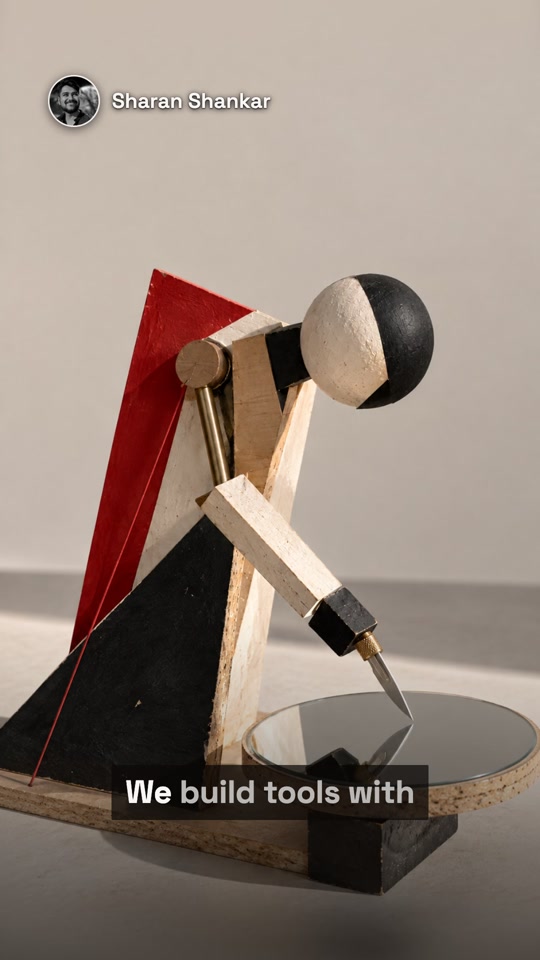
The first time you build something, complexity is the cost of ownership. You accept friction because you are shaping the thing itself. But the second time — and every time after — you are no longer shaping. You are checking, remembering, showing someone else. And yet most systems make no distinction. They hand you the same instrument for both jobs: the scalpel doubles as the mirror. The result is a strange kind of fatigue, where looking at something you already made feels almost as effortful as making it.
This asymmetry matters more than it seems, because revisiting is not a lesser activity. It is where understanding actually consolidates. Creation is generative; return is where judgment happens — where you notice what's wrong, explain it to someone else, decide what to change next. If the tool for return is just a weaker copy of the tool for creation, you inherit all its complexity and none of its purpose. You end up reconstructing intent just to observe a result.
The fix is not a lighter version of the same tool. It's a different posture entirely — one built around the question "what does looking, rather than doing, require?" Looking requires orientation, not control. It requires context — when was this made, how complete is it, what changed since — before it requires manipulation. It requires the ability to hold several past states side by side without confusing them, because the value of history is comparison, and comparison collapses the moment everything gets flattened into "the current version." And it requires access on your terms: sometimes you're picking up something that already lives in a shared space, sometimes you're carrying it in on a drive, and the tool shouldn't force you to pretend those are different acts of trust.
There's a deeper principle underneath this, one about the relationship between an artifact and the standards it was built against. Things we make are rarely finished in an absolute sense — they're finished relative to what we knew and had available at the time. When the underlying standards improve, the honest move isn't to freeze old work in amber, nor to silently rewrite it as if it always matched today's expectations. It's to let the artifact inherit improvement while preserving what was deliberately chosen. Keep the decisions; upgrade the reference. That's a harder design problem than it sounds, because it requires separating "what someone specifically intended" from "what was simply inherited at build time" — and most systems don't bother to make that distinction, so they force a false choice between staleness and erasure.
None of this is really about efficiency, even though it will read that way to a stakeholder scanning for ROI. It's about respect for attention. Every additional step between a person and the thing they're trying to understand is a small tax on their patience, and patience is the scarcest resource in any organization that makes complex things and expects other people — reviewers, collaborators, future versions of the same person — to make sense of them later. Reducing that tax isn't a UX nicety. It's an admission that most of the value of a made thing is realized after it's made, in the looking, the explaining, the deciding — and that a tool which only respects the moment of creation has quietly optimized for the smaller half of the problem.
The organizations that get this right won't necessarily talk about it in these terms. They'll just notice that their work stops feeling disposable — that a plan made three months ago is as easy to open, trust, and discuss as one made this morning. That's a small thing to notice. It's also, in practice, most of what separates tools people tolerate from tools people actually rely on.